
Strategic Property Investment in the Netherlands with Long-Term Stability in Western Europe
The Netherlands offers one of Europe’s most structured, transparent, and resilient property markets — combining strong economic fundamentals, high rental demand, and a stable legal system. From canal-side apartments in Amsterdam to modern developments in Rotterdam and family homes in Utrecht, Dutch real estate provides both lifestyle appeal and reliable long-term returns.
This guide covers the key buying regions, property types, legal process, taxes, rental strategies, and investment considerations to help you navigate property for sale in the Netherlands with clarity and confidence.
Why Buy Property in the Netherlands?
The Netherlands is one of Europe’s most developed economies, known for its efficient governance, strong infrastructure, and international business environment. It consistently attracts investors, expats, and professionals due to its central European location and high quality of life.
Key reasons to consider the Netherlands:
Stable and transparent property market with strict regulations
Strong demand driven by housing shortages in major cities
High rental demand from expats, students, and professionals
Excellent infrastructure including airports, rail, and public transport
Favourable environment for international businesses and startups
Well-regulated mortgage and financing systems
Consistent capital appreciation in urban regions
The Netherlands is particularly attractive for investors seeking steady income, professionals relocating within Europe, and long-term capital preservation in a low-risk environment.
Where to Buy: Prime Regions and Investment Zones
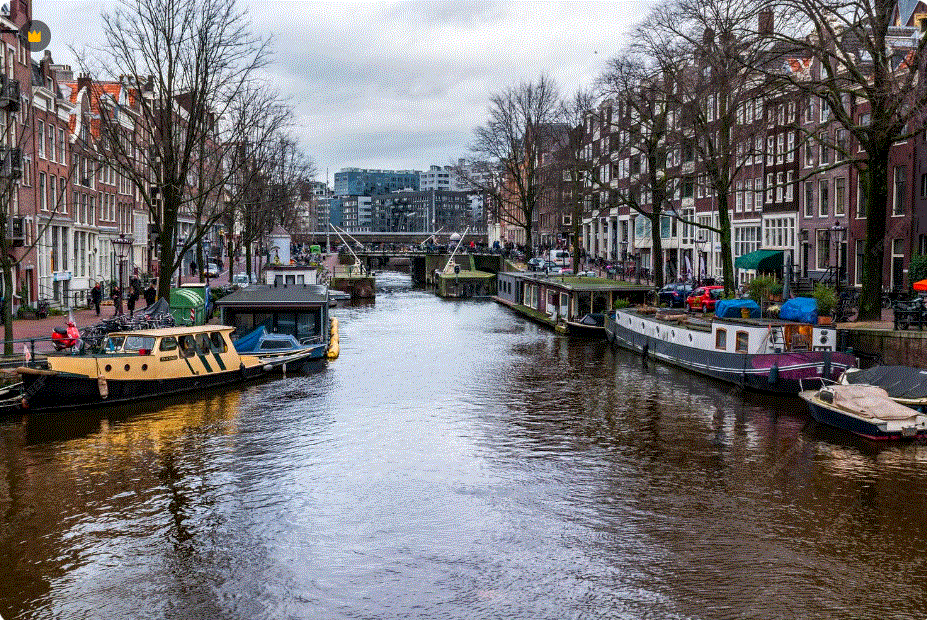
Amsterdam
The financial and cultural capital of the Netherlands. Known for its historic canals, high-end apartments, and strong rental market. Property prices are among the highest in the country, but demand remains extremely strong due to international professionals and limited supply.
Rotterdam
A modern, fast-growing city with innovative architecture and a strong business ecosystem. Compared to Amsterdam, Rotterdam offers more affordable entry points and higher rental yields, making it attractive for investors.
Utrecht
A central city with a strong student population and growing employment opportunities. Utrecht combines historic charm with modern development, offering consistent demand for both rentals and owner-occupied homes.
The Hague (Den Haag)
Home to international organisations, embassies, and government institutions. The Hague attracts diplomats and expats, making it ideal for stable, long-term rental income.
Eindhoven
A technology and innovation hub driven by companies like Philips and ASML. Strong demand from skilled professionals makes Eindhoven a solid choice for investors targeting the tech workforce.
Haarlem & Amstelveen
Popular suburban alternatives to Amsterdam. These areas offer more space, family-friendly environments, and slightly lower prices while maintaining proximity to the capital.
What Can You Buy?
Apartments
The most common property type in Dutch cities. These range from historic canal apartments to modern high-rise units. Apartments are ideal for rental income and urban living.
Townhouses
Traditional multi-level homes often found in city centres and suburban areas. These properties are popular among families and long-term residents.
Detached and Semi-Detached Homes
More common outside major cities. These offer larger living spaces, gardens, and privacy, making them attractive for families and higher-end buyers.
New-Build Developments
Modern developments with energy-efficient designs and contemporary layouts. These are increasingly popular due to strict environmental regulations and lower maintenance costs.
Student Housing and Micro-Apartments
High-demand segments in cities with universities. These properties can generate strong rental yields but may require compliance with specific rental regulations.
The Buying Process in the Netherlands
Select a Property and Make an Offer
Once you identify a property, you submit an offer through a real estate agent. Negotiation is common, especially in competitive markets.
Sign the Purchase Agreement
After acceptance, both parties sign a legally binding purchase agreement. Buyers typically have a three-day cooling-off period to withdraw without penalty.
Arrange Financing
Most buyers secure a mortgage through a Dutch bank or lender. Financing approval is a critical step before finalising the purchase.
Engage a Notary
A civil-law notary handles the legal transfer of ownership. They verify the title, ensure compliance, and prepare the deed.
Final Transfer and Registration
The final deed is signed at the notary’s office, and ownership is officially transferred. The property is then registered in the Dutch Land Registry.
Professional note: The process is highly regulated and transparent, providing strong legal protection for buyers.
Costs, Taxes, and Ongoing Charges
Buyers should plan for additional costs of approximately 5–10% of the purchase price:
Transfer Tax:
Typically 2% for owner-occupied homes
Up to 10.4% for investment properties (subject to change)
Notary Fees:
Approximately 1–2%
Valuation and Mortgage Fees:
Required for financing approval
Agent Fees:
Optional but common in competitive markets
No annual property tax at the national level, but local municipal taxes apply
Ongoing Costs:
Maintenance, insurance, utilities, and homeowners association (VvE) fees for apartments
Capital gains tax is generally not applied to primary residences, but investment properties may fall under wealth tax regulations.
Renting Out Your Dutch Property
Long-Term Rentals
The most common rental model in the Netherlands. Contracts are often regulated, especially in the mid- and lower-rent segments. Demand is consistently high in major cities.
Short-Term Rentals
Short-term rentals are heavily regulated, particularly in cities like Amsterdam. Permits and strict compliance rules are required.
Rental Yields
Gross rental yields typically range between 3% and 6%, depending on location and property type.
Tenant Protection
Dutch rental laws strongly protect tenants. Investors must understand rent control systems, especially in regulated housing segments.
Taxation
Rental income is generally included under wealth tax (Box 3), rather than direct income tax, depending on ownership structure.
Residency and Ownership Considerations
The Netherlands does not offer direct residency through property investment. However, property ownership can complement broader relocation or business strategies.
Key considerations:
EU citizens can purchase property without restrictions
Non-EU buyers can also purchase freely, but residency requires separate visa or work permits
Common routes include employment-based visas, business visas, or the Dutch-American Friendship Treaty (for US citizens)
Ownership can be held personally or through legal entities, depending on tax planning strategies
The Netherlands remains attractive for international buyers due to its open property market and strong legal protections.
Construction Standards, Energy, and Infrastructure
Build Quality
Dutch construction standards are among the highest in Europe. Buildings are designed to withstand environmental conditions and prioritise durability.
Energy Efficiency
Energy performance is a major focus. Properties are rated based on energy labels, with newer homes meeting strict sustainability standards.
Infrastructure
The Netherlands offers world-class infrastructure, including:
Efficient public transport systems
International airports such as Schiphol
Extensive cycling networks
Reliable utilities and high-speed internet
These factors contribute significantly to property value and long-term demand.
Buyer Safeguards and Best Practices
Work with a qualified real estate agent familiar with local market conditions
Always use a registered notary for legal transactions
Review homeowners association (VvE) documents for apartments
Understand zoning laws and rental regulations before investing
Conduct a structural survey, especially for older properties
Be aware of bidding competition in high-demand areas
Taking these steps ensures a smooth and secure purchasing experience.
How We Help at Buyeuropeanproperty.com
At Buyeuropeanproperty.com, we guide you through every stage of buying property in the Netherlands — from identifying high-potential locations to navigating legal, financial, and tax considerations.
Whether you are looking for a centrally located apartment in Amsterdam, a high-yield investment in Rotterdam, or a family home in Utrecht, we connect you with trusted agents, legal experts, and tailored opportunities.
We also support international buyers with financing guidance, property sourcing, and long-term investment planning aligned with their goals.
Ready to Explore Property for Sale in the Netherlands?
Start with a clear objective — whether it is rental income, relocation, or long-term capital growth.
Contact Buyeuropeanproperty.com for curated listings, market insights, and personalised guidance through the Dutch property market.
From historic canal houses to modern sustainable developments, the Netherlands offers a structured, secure, and opportunity-rich environment for property investment in one of Europe’s most stable economies.